What Your Prefrontal Cortex Is Actually Doing During a Brain Game
The prefrontal cortex is not a muscle and a grid game is not a gym. But specific parts of it do get recruited in fairly predictable ways when you play. Here is the map, game by game.
The prefrontal cortex has a good marketing department. It gets called the CEO of the brain, the seat of willpower, the part that makes us human. None of that is exactly wrong, but none of it tells you what happens in the forty seconds after you press start on a Schulte grid.
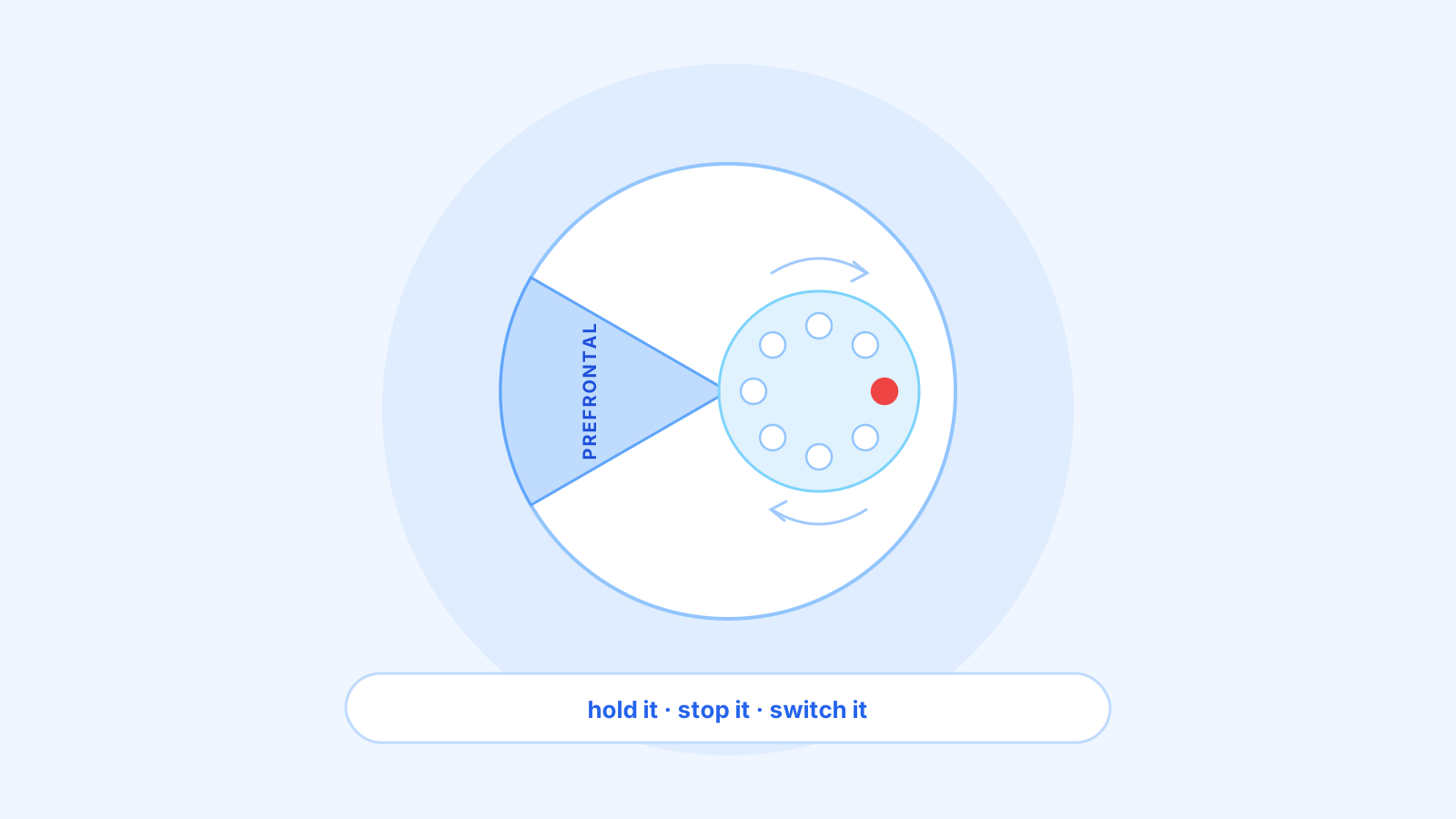
A more useful description: the prefrontal cortex keeps information alive when it is no longer in front of you, and uses that information to bias what you do next. Miller and Cohen made this case in 2001 — prefrontal cortex maintains goals and sends top-down signals that favour the actions leading toward them. Holding a phone number in your head for ten seconds uses it. Stopping yourself from clicking 19 when you are hunting for 18 uses it too.
Three jobs, one region
Adele Diamond’s 2013 review splits executive function into working memory, inhibition, and cognitive flexibility — the last meaning switching rules when the situation changes. All three lean on prefrontal circuits, and all three appear in the games on this site, just in different proportions. That is the part worth knowing before you decide which game you are actually practising.
Game by game
- Schulte grids are mostly selective attention with a motor brake. You hold the next number as a goal (working memory), ignore twenty-four equally loud distractors, and suppress the click until you are certain. The eye movements belong largely to the frontal eye fields, but the wait, not that one belongs to prefrontal cortex.
- Focus Flash leans on working memory under interference. One circle turns red, the colour fades, then everything drifts. To answer right you must keep a location in mind while seven identical objects compete for the same visual space. That is a delayed-response task wearing a game costume — the same logic as the tasks Fuster and Goldman-Rakic used with monkeys, where dorsolateral prefrontal neurons hold a location through a delay.
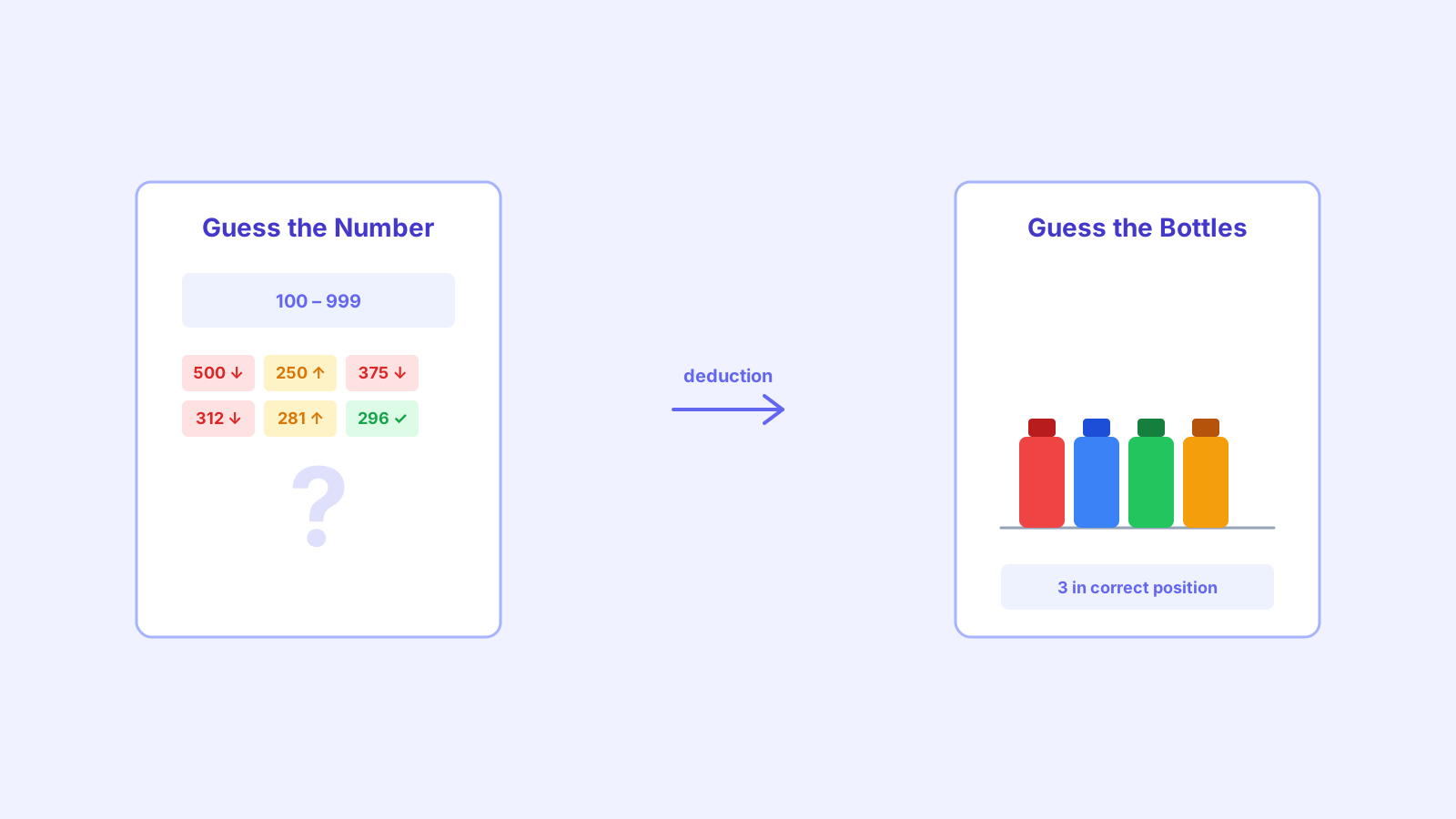
- Guess the Number is hypothesis testing on a budget. Every guess eliminates part of the range, so you have to update your model of the answer instead of merely storing it. Frontopolar cortex, the most forward strip of the prefrontal lobe, has been tied to this kind of branching, multi-step reasoning (Koechlin and colleagues, 1999).
- Bottles and the memory games sit closer to planning and maintenance. Tower of London style planning tasks recruit dorsolateral prefrontal cortex reliably in imaging work, and digit span depends on a short-term store that spans prefrontal and parietal regions.
The uncomfortable part
Everything above is about recruitment, not improvement. Showing that a task uses the prefrontal cortex is easy. Showing that practising it makes the prefrontal cortex better at everything else is where the field gets stuck. Owen and colleagues (2010) trained more than 11,000 people on online brain games for six weeks. They got better at the trained games and essentially nowhere else. Meta-analyses of working memory training (Melby-Lervåg and Hulme, 2013) landed in a similar place: gains stay close to the trained task.
That does not make the games useless. It makes them specific. If you want to get better at finding things in clutter, a grid is a sensible way to spend ten minutes. If you want a general intelligence upgrade, the evidence is not there, and anyone promising one is selling something.
A fussy control system
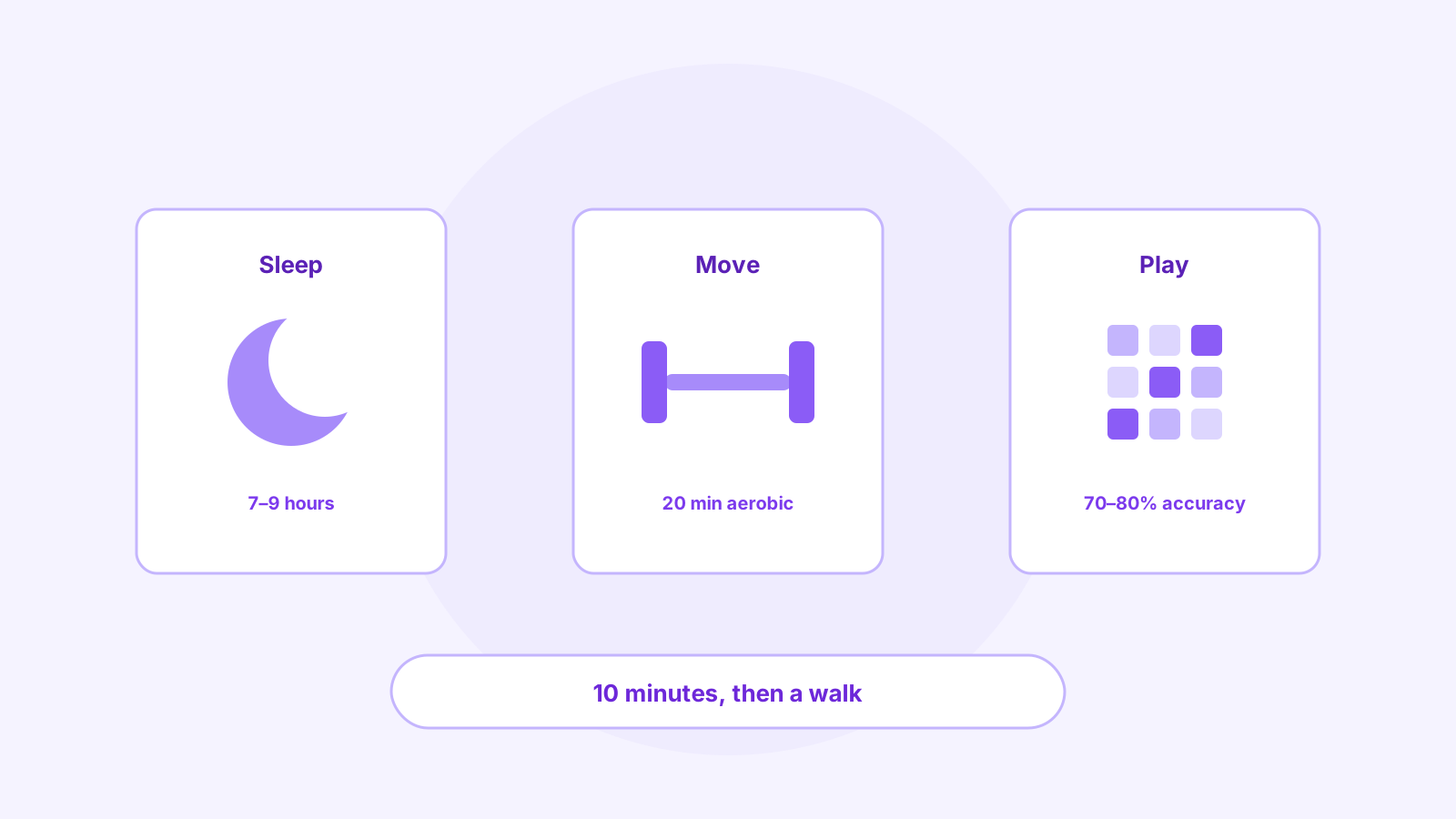
One more thing worth knowing. Prefrontal function tracks your state in a way that eyesight does not. Acute stress floods it with noradrenaline and dopamine; moderate levels sharpen signalling and high levels take it offline (Arnsten, 2011). Sleep loss does something similar — Yoo and colleagues (2007) found that a single night of deprivation amplified amygdala reactivity and weakened its coupling with medial prefrontal cortex. Your midnight score is not a clean reading of your attention.
Which is why the same person can be sharp at nine and hopeless at four on identical grids. Before drawing conclusions about your focus from one bad round, check the boring variables: sleep, food, and how many rounds you have already played.
The prefrontal cortex is not a muscle you can exhaust with reps and grow. It is a control system that works well when it is rested, challenged at the right difficulty, and given clear feedback. The games here handle the third item rather well. The first two are on you.